Sexbot
Play Sexbot
Sexbot Screenshots

















Sexbot review
Explore mechanics, animations, and what makes this indie title stand out
Sexbot is an indie game that has gained attention in the gaming community for its unique approach to game design and mechanics. Developed as a standalone title, this game combines challenging gameplay with distinctive animations and humor that appeals to a specific audience. Whether you’re curious about the game’s mechanics, interested in its difficulty level, or want to understand what sets it apart from other indie titles, this guide covers everything you need to know about Sexbot. From its core gameplay systems to player feedback and replayability features, we’ll explore what makes this game noteworthy in the indie gaming landscape.
Understanding Sexbot: Gameplay Mechanics and Core Features
Ever found yourself staring at a game screen, utterly baffled by what you’re supposed to do next? 🤔 I have. Many times. But sometimes, that moment of confusion is the gateway to something brilliantly unique. That’s exactly the feeling Sexbot cultivates—an indie title that throws you into its weird, wonderful world with minimal hand-holding and maximum personality. It’s not just a game; it’s a test of wit, timing, and your ability to laugh when you fail spectacularly. Let’s peel back the layers and understand what makes this game’s heart beat.
What Is Sexbot and How Does It Play?
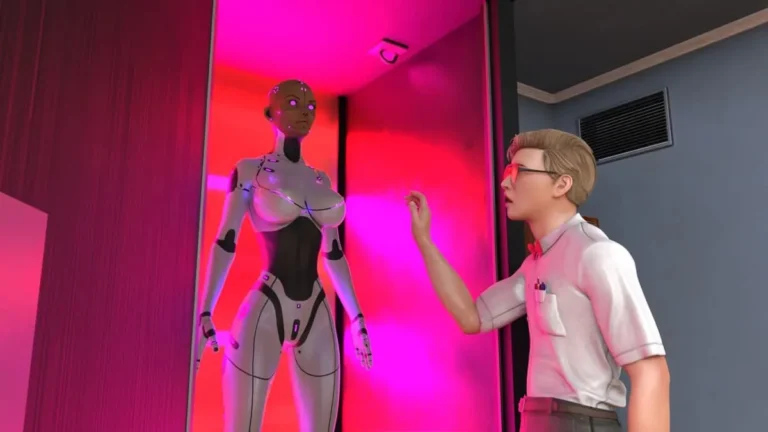
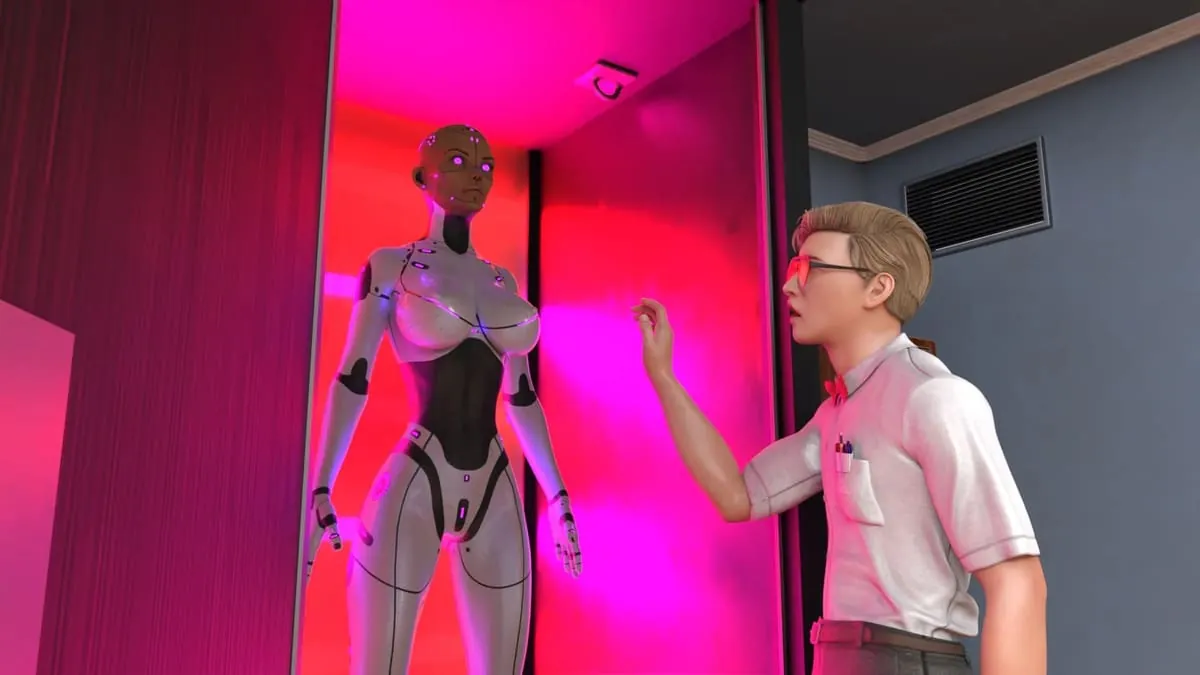
At its core, Sexbot is a narrative-driven puzzle-platformer with a sharp, satirical edge. You find yourself in a clandestine research zone, a facility buzzing with chaotic energy and bizarre experiments. Your goal isn’t just to run and jump; it’s to interact, explore, and solve your way through a series of increasingly complex scenarios. The indie game gameplay loop is deceptively simple: enter a room, understand the problem (which often involves the titular android in various states of distress or hijinks), and use the environment to create a solution.
But calling it a “puzzle-platformer” feels almost too generic. What truly defines the Sexbot game mechanics is their physicality and cause-and-effect chaos. You’re not just pressing a button on a terminal; you’re moving objects, triggering chain reactions, and often watching your careful plans go hilariously awry. The controls are tight and responsive, which is absolutely critical because the margin for error is virtually zero.
Here’s a quick breakdown of the key Sexbot game mechanics you’ll master (or wrestle with):
- Environmental Interaction: Nearly everything can be touched, moved, or activated. This is your primary tool for puzzle-solving.
- Precision Platforming: Demanding jumps and timed movements are constant, requiring perfect input execution.
- Puzzle Logic: Solutions are often logical but obscured by the game’s absurdist humor. Think outside the box!
- Narrative Integration: The story isn’t just told in cutscenes; it’s embedded in the puzzles and the environment of the research zone.
The magic is in how these systems intertwine. You might need to use a carefully placed object to create a step, which allows you to reach a lever, which alters the room’s state, just to create a safe path forward for a split second. It’s a ballet of precise inputs and clever thinking. Learning how to play Sexbot is less about memorizing controls and more about learning to think like the game’s mischievous developers. One player put it perfectly: “It feels less like solving a puzzle and more like finally understanding a joke that’s been staring you in the face for an hour.” 😅
Animation Quality and Visual Design
If the mechanics are the brain of Sexbot, the animations are its overflowing, charismatic soul. This is where the game makes its first—and lasting—impression. From the moment you boot it up, the game animations quality is unmistakably top-tier. We’re talking smooth, expressive, and packed with personality in every single frame.
The titular character is a marvel of indie animation. Every movement, from a confused head tilt to a frantic scramble, is fluid and brimming with character. These aren’t just functional animations; they’re performative. They sell the comedy, the frustration, and the unexpected moments of weird sincerity. When a solution backfires (which it will), the resulting chaotic sequence is often so well-animated that you’ll be equal parts frustrated and impressed.
This commitment to quality extends to the entire world. The research zone feels alive. consoles blink with purpose, machinery hums and moves with weight, and ambient details in the background tell their own silent stories. The visual design uses a crisp, distinct art style that ensures clarity amidst the chaos—you always know what is an interactive element and what is backdrop, which is vital for a game this demanding.
I remember one particular puzzle involving a conveyor belt and a magnet. My solution was correct, but my timing was off by a fraction of a second. What followed was a cascading failure of items flying and the bot flailing that was so beautifully choreographed, I burst out laughing instead of groaning. That’s the power of great animation—it turns failure into entertainment.
This high game animations quality does more than just look pretty. It provides crucial feedback. The responsiveness of your actions is visually clear, and the exaggerated motions sell the game’s physical comedy, making the brutal difficulty easier to swallow. In a landscape of difficult indie games, this polish is what keeps your fingers glued to the controller, ready to try “just one more time.”
Difficulty Levels and Challenge Systems
Let’s address the biomech-elephant in the room: Sexbot is hard. Really hard. It proudly earns its place among the pantheon of difficult indie games. But here’s the crucial distinction—its Sexbot difficulty level rarely feels cheap or unfair. It is meticulously, almost sadistically, designed.
The challenge isn’t about enemy health bars or random chance. It’s about execution and comprehension. The game teaches you its language quickly, and then it expects you to become fluent. A puzzle might have a solution you understand in seconds, but pulling it off requires frame-perfect jumps, split-second timing, and flawless object manipulation. This creates a fascinating push-and-pull where your brain often relaxes before your fingers begin their trial by fire.
The difficulty scales masterfully with the narrative. As the story in the research zone descends into greater chaos, the puzzles and platforming sequences become more elaborate and demanding. The game doesn’t introduce new mechanics arbitrarily; it finds deeper, more complex ways to use the tools you already have. This sense of organic progression is a hallmark of brilliant indie game gameplay.
So, who is this for? The game is clearly built for players who relish a supreme challenge. Yet, there’s an unexpected accessibility in its design. Because checkpoints are generous and retries are instantaneous, the pain of failure is minimized. You’re never set back more than a few seconds. This creates a “one more try” addiction that is incredibly powerful. The balance is struck not by offering an easy mode, but by removing the friction between attempt and re-attempt.
Consider this player’s journey, which mirrors my own:
Early Game: “Okay, I get it. Move this box there, jump on it, hit the switch. This is logical!”
Mid-Game: “Wait, I have to bounce off the moving platform while activating the magnet to change its polarity, then wall-jump? My brain hurts but my hands are trying.”
Late Game: “I have precisely 1.5 seconds from triggering the first laser to landing on the final platform, which requires a mid-air direction change off a projectile I launched myself. This is insanity. I love it.”
This relentless challenge is the engine of the game’s game replayability features. Beating it once is a badge of honor. But many players, myself included, go back to perfect their runs, shave off seconds, or simply to experience that exquisite pain-pleasure loop again. There’s a deep satisfaction in mastering something that once seemed impossible. The Sexbot difficulty level isn’t a barrier; it’s the entire point, transforming the game from a simple pastime into a compelling, replayable achievement.
| Difficulty Aspect | How It Manifests in Gameplay | Player Experience |
|---|---|---|
| Puzzle Complexity | Multi-stage solutions requiring precise object sequencing and environmental manipulation. | “Aha!” moments followed by intense execution phases. |
| Platforming Precision | Pixel-perfect jumps, tight timings, and demanding airborne control. | High tension and immense satisfaction upon success. |
| Execution Demand | Solutions require near-flawless input sequences with minimal room for error. | A trial-and-error loop that feels rewarding to master. |
| Learning Curve | The game teaches its rules quickly and then expects expert-level application. | A steep but fair curve that rewards player growth. |
Ultimately, Sexbot stands out because it commits fully to its vision. Its gameplay mechanics are deep and punishing, its animations quality is stunningly expressive, and its place among difficult indie games is well-earned and integral to the experience. It’s a game that respects your intelligence and dexterity while never taking itself too seriously, making every frustrating death and hard-fought victory part of a uniquely memorable, and highly replayable, journey. 🏆
Sexbot stands out in the indie gaming community as a title that successfully combines challenging gameplay with polished animations and humor. The game’s insane difficulty level, praised animation quality, and strong replayability make it an interesting choice for players seeking a unique experience. Whether you’re drawn to the game’s mechanical challenge, its distinctive visual style, or its reputation for humor and engagement, Sexbot offers something different from mainstream gaming. If you’re considering trying the game, approach it with patience for the difficulty curve and an appreciation for indie game creativity. For those already playing, the community continues to suggest new features and improvements, showing that Sexbot maintains active player interest and developer engagement.