
Infinite Jump Screenshots
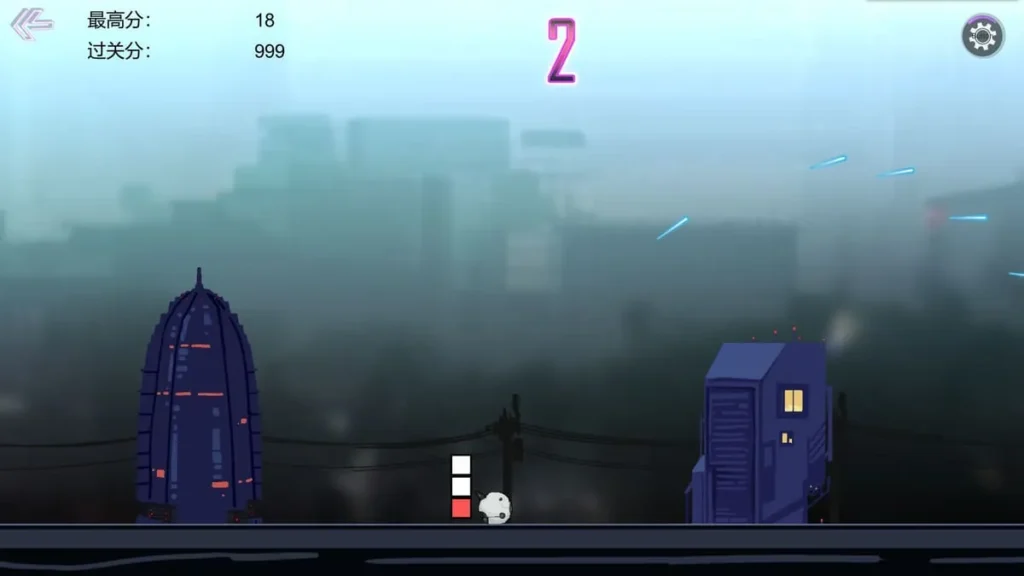


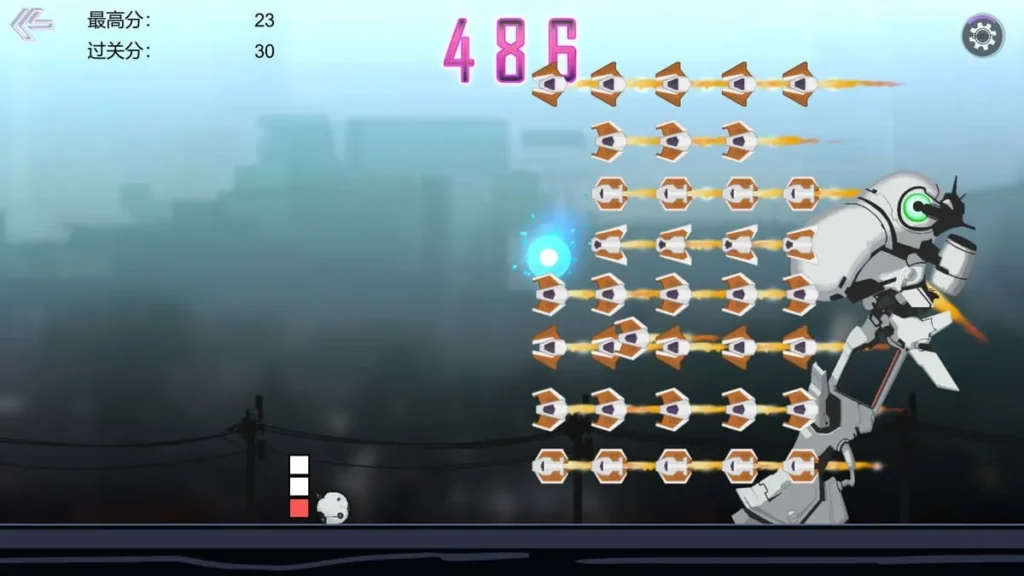


Infinite Jump review
Master the momentum-based platforming experience that redefines skill-based gaming
Infinite Jump stands out as a revolutionary platformer that combines momentum-based jumping with intricate combo systems and progressive difficulty. Unlike traditional platformers with predictable jump arcs, this game treats jumping as a direct extension of your velocity, creating a fluid and dynamic movement system. Whether you’re a seasoned platformer enthusiast or curious about innovative game design, Infinite Jump offers an experience that rewards skill, timing, and exploration. The game’s physics-driven approach transforms simple jumping into an art form, where every leap builds upon the last, creating a mesmerizing flow state that keeps players engaged for hours.
Understanding Infinite Jump’s Physics and Movement System
You know that feeling in most platformers? You build up a head of steam, hit the jump button at the edge, and… your character performs the same predictable, floaty arc. It never quite matches the explosive energy you had on the ground. 😤 It’s disconnected. For years, I accepted this as just “how games work.” Then I played Infinite Jump, and everything changed. My entire understanding of movement in games was turned on its head. This isn’t just another platformer; it’s a physics-based playground where you don’t just command a character, you harness raw kinetic energy. 🚀
At the heart of this revelation is the game’s revolutionary platformer physics system. Forget static jumps. Here, you become momentum. This chapter is your deep dive into the gears and pulleys that make Infinite Jump feel so incredibly responsive, fluid, and downright addictive. We’re going to strip back the magic and look at the brilliant game physics engine that makes it all possible.
How Momentum-Based Jumping Works
Let’s start with the core law of Infinite Jump: velocity is king. 🏃♂️➡️✈️ Traditional platformers often use a fixed jump arc. Press jump, and you get a predetermined height and distance, barely influenced by your ground speed. Infinite Jump throws that handbook out the window. Its momentum-based jumping mechanics mean every bit of speed you generate on the ground is precious cargo you carry into the air.
Here’s the simple, glorious science: how does momentum affect jumping? When you sprint full-tilt to the right and leap, your character doesn’t start a new, slower trajectory. They launch with all that horizontal velocity intact. You soar further, faster, and with more power. This is velocity-based jumping in its purest form. The faster you’re moving, the more dramatic and far-reaching your jump becomes. It transforms the simple act of jumping from a move into a statement.
But it gets better. This system grants you an incredible degree of air control platformer fans dream of. In mid-air, you’re not a passenger. Pushing left or right applies a gentle but meaningful force, allowing you to curve your trajectory, steer around obstacles, or make those last-millisecond adjustments to land on a tiny platform. You’re not just following a pre-drawn path; you’re actively guiding a force of nature. It feels less like inputting commands and more like surfing a wave of your own creation.
Real Gameplay Example: Picture a long chasm with a series of crumbling platforms. The old-school method would be to stop at each edge, line up a careful standing jump, and repeat—a slow, disjointed process. In Infinite Jump, you sprint off the first platform without hesitation. Your first jump, fueled by your sprint, carries you massively far. As you land on the second platform, you don’t stop; you instantly leap again, adding the landing impact to your existing momentum. With subtle left-stick nudges mid-air, you weave between floating hazards. One continuous, flowing motion clears the entire gap. That’s the power of momentum in action.
Understanding this carry-over is the first step to mastery. Here’s a breakdown of how key inputs affect your movement:
| Your Action | Effect on Momentum & Jump | Pro Tip |
|---|---|---|
| Standing Still → Jump | A standard, vertical-heavy jump. Useful for precision height but lacks distance. | Use this for adjusting on small, safe platforms, not for traversal. |
| Walking → Jump | Carries a modest amount of horizontal speed. A balanced, controllable jump. | Your go-to for navigating tight, technical sections with platforms close together. |
| Sprinting → Jump | The full expression of velocity-based jumping. Maximum distance and speed. | Always build up a sprint before a big gap. Momentum is your lifeline! |
| Changing Direction Mid-Air | Applies a steering force, creating a curved trajectory without killing your forward speed. | Use gentle taps, not holds, for precise corrections. Think “nudging” your path. |
This platformer physics system creates a thrilling risk-reward loop. Do you build up insane speed to clear a huge section, knowing that controlling that much energy will be harder? Or do you take a more measured, controllable approach? The choice, and the skill to execute it, is always in your hands.
Mastering Collision Detection and Air Control
A physics system this dynamic would be chaos without an incredibly precise and forgiving partner: the collision detection in games. This is the unsung hero of Infinite Jump. It’s not just about determining if you hit something; it’s about how you hit it and how the game intelligently interprets your intent to keep your flow alive. 🧠
In many games, collision feels binary and punishing. Clip the edge of a platform by a pixel? You fall. Brush a wall while trying to wall-jump? You slide off. Infinite Jump’s approach is more nuanced and player-friendly. The game physics engine registers collisions with a focus on maintaining momentum and combo potential. Landing on the very edge of a platform? The game will often “snap” you to a stable landing if your trajectory was true, rewarding a daring leap instead of punishing a pixel-perfect fail.
This brilliance shines brightest in adrenaline-fueled clutch moments. You misjudge a jump and are headed for the abyss. At the last second, you graze the side of a moving wall. Instead of bouncing off uselessly, the precise collision detection recognizes the contact and enables a wall-jump, catapulting you back to safety and keeping your jump chain—and your heart rate—intact. These moments don’t feel like lucky glitches; they feel like the game recognizing your skill in harnessing physics at the极限.
The synergy with air control platformer mechanics is key here. The collision system provides the reliable “touchpoints” in the world, and your air control lets you navigate to them. It’s a beautiful dialogue between player input and game response.
Personal Insight: I’ll never forget the level “Vertigo Spire.” I was on a insane combo, high above any safe ground, ricocheting between narrow pillars. On one jump, I over-steered and knew I was going to face-plant into the side of the next pillar, which meant certain death. In a panic, I let go of all controls just before impact. The smart collision detection registered my feet hitting the surface first, interpreted it as a “skid” rather than a crash, and allowed me to slide down the pillar just enough to leap off it backwards. That single, intelligent system check turned a catastrophic error into a recoverable—and incredibly cool—maneuver. It’s moments like these that build immense trust in the game’s systems.
Mastering this aspect means learning to trust the game’s “forgiveness” and understanding its logic:
* Platform Edges: Be bold. The game rewards aggressive, momentum-based jumps onto platform corners.
* Wall Surfaces: Not all contact is failure. A glancing blow can often be converted into a save or a redirect.
* Enemy Hitboxes: Precision collision detection means you can often graze past enemies or use them as bounce points without taking damage if your angle and speed are right.
This isn’t a system that coddles you; it’s one that respects the kinetic story you’re trying to tell. It ensures that failure is almost always due to a mistake in your physical calculation, not a unfair quirk of the hitboxes.
The Flow State: Why Movement Feels Incredible
So, we have groundbreaking momentum-based jumping mechanics and intelligent collision detection in games. When these elements fuse, they create something greater than the sum of their parts: an uninterrupted, intoxicating flow state. This is the secret sauce, the reason you’ll find yourself saying “just one more run” at 2 AM. ⏱️✨
The platformer physics system in Infinite Jump is engineered for rhythm and continuity. There are no hard stops, no jarring transitions. Landing from a jump seamlessly feeds into your next sprint. Bouncing off a wall injects a burst of new velocity into your existing vector. The game physics engine works tirelessly to make every action lead fluidly into the next, creating a sense of perpetual motion. You stop thinking about individual buttons and start thinking in terms of curves, angles, and acceleration. You are the momentum.
This incredible sense of control and responsiveness is what separates a good platformer from a genre-defining one. You never fight the controls. The character on screen feels like a direct, amplified extension of your will. Want to make a microscopic adjustment mid-flight? You can. Want to abort a long jump and reverse course? The air control platformer design allows for it (though it will cost you precious speed). This responsiveness breeds confidence, and confidence allows for breathtaking displays of skill.
The ultimate goal of this entire physics-based playground is to make you feel like a master of a unique physical language. The satisfaction doesn’t just come from reaching the end of a level, but from how you chose to traverse it. Did you take the high-speed aerial highway, threading through narrow gaps? Or the lower, tech-heavy route filled with precise wall-jumps and momentum carries? The game’s velocity-based jumping and intelligent systems actively encourage and reward creative, stylish play.
When it all clicks—when you chain a sprinting jump into a wall-slide, rebound across a gap, curve around a spinner, and land perfectly on a distant platform without ever breaking stride—that’s the magic. You’re no longer just playing a game. You’re conducting a symphony of physics, and every leap, every collision, every subtle mid-air correction is a note in a masterpiece of motion you composed yourself. This is the soul of Infinite Jump. It redefines skill-based gaming not by making things brutally hard, but by making movement so profoundly expressive and satisfying that mastery becomes its own reward. 🏆
Infinite Jump represents a masterclass in platformer design, where every element—from momentum-based physics to the combo system and progressive difficulty—works in harmony to create an unforgettable gaming experience. The game’s commitment to skill-based gameplay, combined with its innovative physics engine and rewarding progression system, sets it apart from traditional platformers. Whether you’re drawn to the fluid movement mechanics, the challenge of building massive combos, or the satisfaction of unlocking new customization options, Infinite Jump delivers on multiple fronts. The careful balance between accessibility and challenge ensures that both newcomers and veteran platformer fans find something to love. If you’re looking for a game that respects your skill and rewards your dedication, Infinite Jump is absolutely worth exploring.