Play Stellar Dream
Stellar Dream Screenshots










Stellar Dream review
A practical, first-hand look at the Stellar Dream game experience
Stellar Dream is a narrative-driven game known for its distinct visual style and character-focused scenes, and this article dives deep into everything a prospective player wants to know about it. In the next sections I’ll share my personal experiences, practical tips for getting the most from gameplay, and a clear breakdown of features, systems, and progression. Whether you’re researching before your first playthrough or looking to master the title, this guide gives step-by-step advice and honest impressions to help you decide if Stellar Dream is a good fit for you.
Gameplay Overview: What to Expect in Stellar Dream
Alright, space cadets, buckle up. Let’s talk about what it actually feels like to boot up Stellar Dream for the first time. This isn’t just another visual novel; it’s a whole vibe. The Stellar Dream gameplay is a unique blend of immersive storytelling and tactile interaction that had me hooked from the main menu. If you’re wondering how to play Stellar Dream, you’re in the right place. We’re going on a guided tour of the controls, the flow, and the little secrets that make this journey so special. 🚀
Core mechanics and interface
First things first: getting comfy with the lay of the land. The Stellar Dream interface guide starts the moment you launch. You’re greeted by a stunning, animated starscape menu that sets the tone perfectly. Navigation is smooth and intuitive. The main modes are accessed through large, clear icons—New Voyage, Continue, Extras (where the goodies live), and Settings.
The core loop is deceptively simple. You explore beautifully painted scenes, interact with points of interest (a glowing console, a strange plant, a character’s personal item), make dialogue choices, and occasionally tackle light puzzle elements or mini-games to advance the plot. Your primary Stellar Dream controls are click (or tap)-based. You’ll click to advance text, click on hotspots, and click to select your choices. It sounds basic, but the responsiveness and subtle audio/visual feedback on every action make it feel satisfyingly deliberate.
Here’s a personal tidbit: I was initially worried about missing interactive elements. But the game is brilliant about subtly guiding your eye. Important objects often have a gentle shimmer or are framed by the scene’s lighting. Within ten minutes, I stopped “searching” and just started seeing, which is exactly how it should be.
The interface during a scene is clean and non-intrusive. You’ve got:
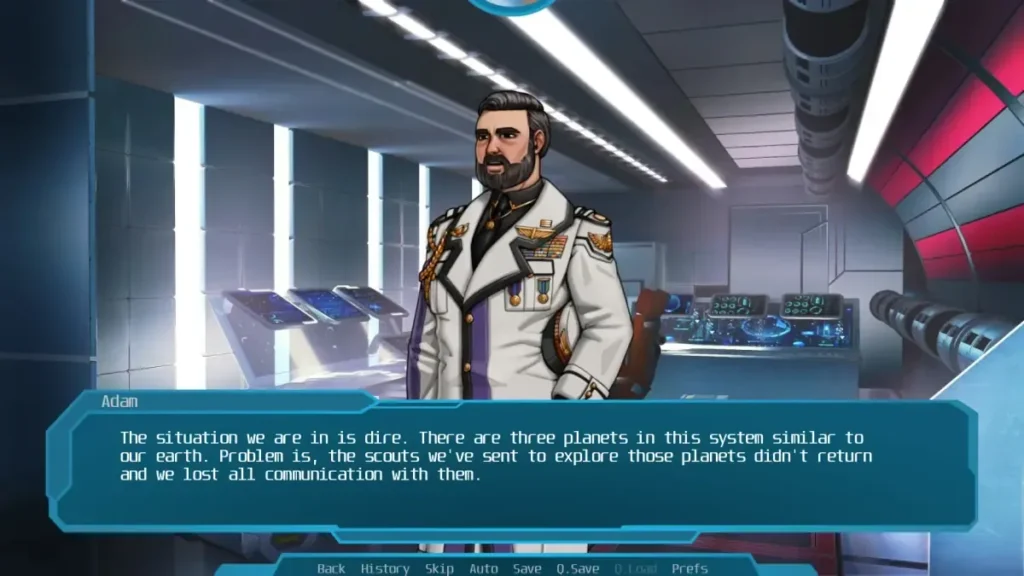
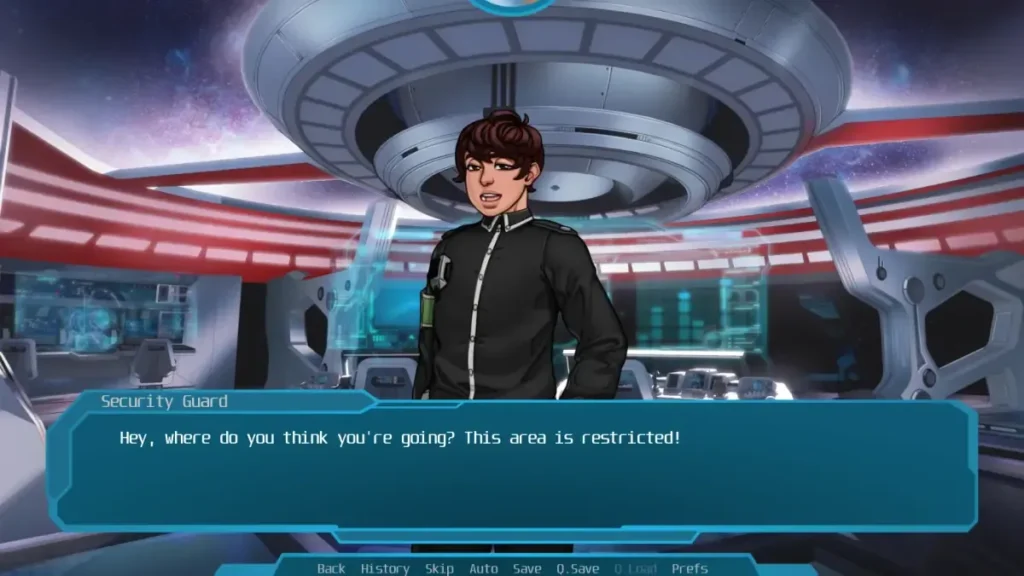
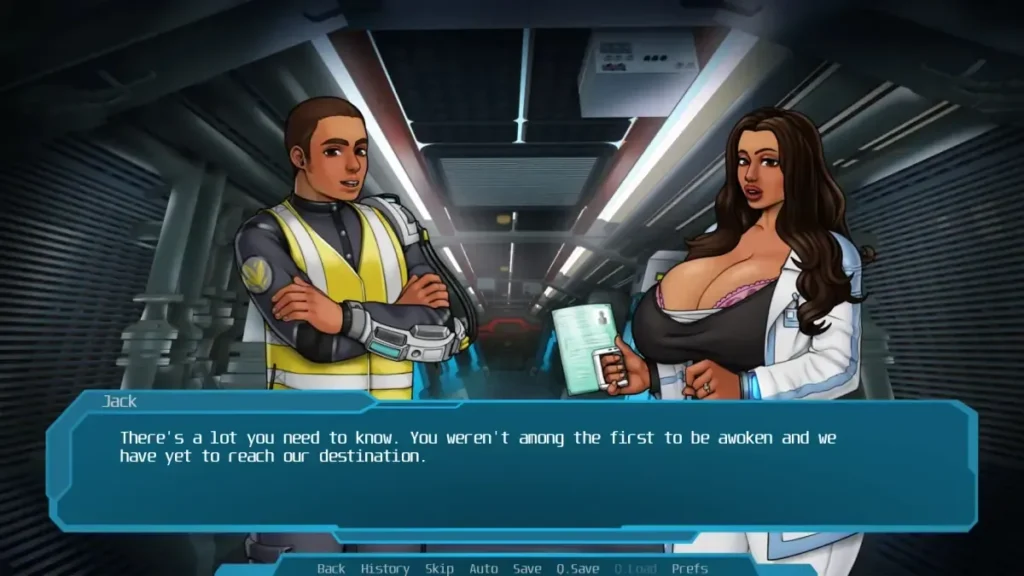
* A transparent text box at the bottom with character portraits that shift expression with the dialogue.
* A small, stylish menu button in the corner that lets you quickly save, load, adjust settings, or skip text (once you’ve seen it).
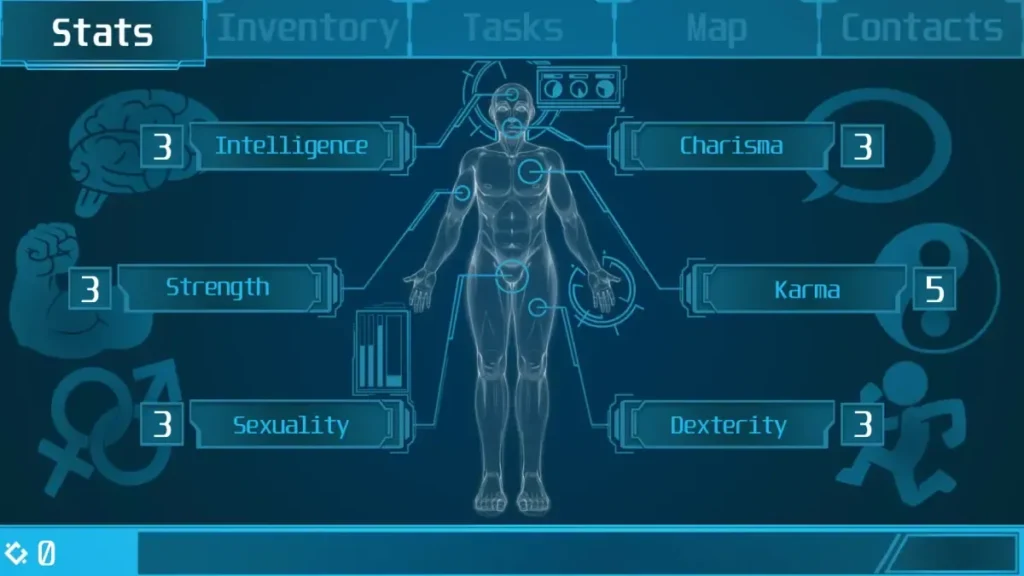
* Your inventory/log is tucked away but easily accessible, automatically updating with clues and key items.
Speaking of save system—use it often! 💾 You get multiple save slots and a quick-save function. I learned this the hard way. During my first session, I made a choice that locked me into a narrative branch I wasn’t ready for. Without a recent save, I had to replay a solid 20 minutes. Now, I save at every major choice. The game also auto-saves at chapter breaks.
On the quality-of-life front, the settings menu is a dream. You can adjust text speed, enable auto-advance, toggle voiceovers (which are excellent, by the way), and modify the difficulty of the occasional puzzle segments. There’s even a comprehensive log that tracks every major story beat and character note you’ve discovered—a lifesaver if you take a break and come back later.
To help you choose your starting style, here’s a quick breakdown of the play modes. This isn’t a menu option, but rather how I’d categorize the experience based on your goals:
| Play Style | Session Length | Focus | Best For… |
|---|---|---|---|
| Casual Explorer | 30-45 mins | Story immersion, relaxation, enjoying the art and music. | First-time players, those who want to unwind and absorb the narrative. |
| Completionist Archivist | 60-90 mins+ | Uncovering every clue, exhaustively checking all dialogue trees and hotspots. | Players hunting all endings, achievements, and lore fragments. |
| Puzzle Seeker | Varies | Engaging with the game’s logic and environmental puzzle mechanics. | Players who enjoy the problem-solving aspects woven into the story. |
Narrative structure and pacing
So, how does the story unfold? Stellar Dream uses a chapter-based structure, but it feels more organic than a simple list. You move through distinct locations and story acts, each chapter closing with a sense of accomplishment and a cliffhanger that made me immediately click “Continue.” The pacing is masterful—it knows when to let you breathe and soak in the atmospheric scenery, and when to hit you with rapid-fire dialogue choices during tense moments.
The narrative is branching, but not in a chaotic, overwhelming way. Think of it as a river with several major tributaries. Your early choices gently steer you toward one of these narrative paths, influencing which characters you bond with, what information you discover first, and ultimately, your destination. My first playthrough and my second felt like different facets of the same grand tale, not wholly separate stories. This is the heart of Stellar Dream replayability. You’re not just replaying to click different options; you’re seeing how the same events look from another character’s perspective or with a different piece of key knowledge.
A typical session for me, as a Completionist Archivist, lasted about an hour. That was usually enough to get through a chapter, explore everything, and sit with the consequences of a big decision. The game is perfect for bite-sized nightly adventures or a deep weekend dive. The “Just One More Chapter” pull is very, very real. 😅
Progression, rewards, and unlockables
This is where Stellar Dream progression gets really engaging. There’s no traditional “experience points” or currency. Instead, you progress by unlocking scenes, story branches, and entries in your galactic codex. Your choices directly open up or close off paths. It’s a pure, narrative-driven progression system that feels incredibly rewarding.
Your main “rewards” are:
* New Scenes and Chapters: The core progression. Make choices, solve puzzles, and the story advances.
* Codex Entries: Every major character, location, alien flora/fauna, and cosmic phenomenon you encounter gets a beautifully illustrated entry in your codex. Filling this out became a personal obsession.
* Alternate Endings: The big one. There are multiple core endings, determined by your major relationship choices and key decisions in the final act. I’ve seen three so far, and each one reshaped my understanding of the entire journey.
* Gallery Unlocks: As you reach certain milestones, the Extras menu fills with concept art, music tracks, and character profiles. Some of these are tied to hidden achievements (like finding all interactive elements in a chapter or choosing a specific, rare dialogue path).
There’s no grinding or gating. If you can figure out the puzzle or make the right choice, you move forward. Your goals shift naturally: first, it’s “see the story.” Then, it’s “get Ending B.” Then, “I must find out what’s in that locked data-core in Chapter 3 I missed before.”
My #1 Practical Tip: On your first playthrough, play selfishly. Don’t try to “game” the system or guess the “best” choice. Pick what you genuinely want to say or do. The most authentic Stellar Dream gameplay experience comes from living with your instincts. You can always be a completionist later.
Let’s walk through your ideal first 15 minutes:
1. Boot up and start a New Voyage. Choose your preferred text speed and enable voiceovers. Trust me on this.
2. The prologue scene fades in. You’re in your ship’s cockpit. Listen to the intro. Don’t skip.
3. First interaction: Click on the flashing navigation console. This introduces the hotspot mechanic.
4. First dialogue choice: Your AI companion, ARIA, will speak. You’ll get two response options, usually one curious/kind and one pragmatic/direct. Pick whichever fits your mood. This sets an early, subtle tone for your relationship.
5. Explore the cockpit. Click on the holographic star map, the photo tucked by the controls, and the viewport. Each adds a codex entry and fleshes out the world.
6. The alert sounds. This triggers the first minor puzzle: rerouting power. The game will highlight the three consoles you need to interact with in order. Follow the prompts.
7. After the puzzle, you’ll have your first major story choice. A distress signal comes in. You can choose to Investigate Immediately or Scan for Threats First. This is a classic Stellar Dream branch point. The former jumps you into character interaction faster; the latter yields extra tactical codex info. There’s no “wrong” answer.
8. Save your game. Create your first manual save here, naming it something like “Ch1 – Distress Signal Choice.”
By this point, you’ll have experienced the core loop: narrative, exploration, choice, and light puzzle-solving. You’re now officially on your way.
Ultimately, understanding how to play Stellar Dream is less about memorizing controls and more about surrendering to its rhythm. The Stellar Dream interface is your quiet copilot, and the progression system is a map written in the stars, waiting for you to draw the lines between them. The replayability comes from the human (and alien) urge to ask, “What if?” So, set your course, save often, and let your curiosity be your guide. Your dream among the stars awaits. ✨
Stellar Dream delivers a focused, character-driven experience that rewards exploration and replay; this guide covered core gameplay, sensory presentation, practical strategies, and where to engage with the community. If you’re curious, try a short first session using the suggested settings and choices from the tips chapter, then join a community hub to compare outcomes and discover hidden content. If you found this guide helpful, bookmark it and share your own first-play anecdotes in the community spaces noted above.